TRADITION
THE CIOCIE
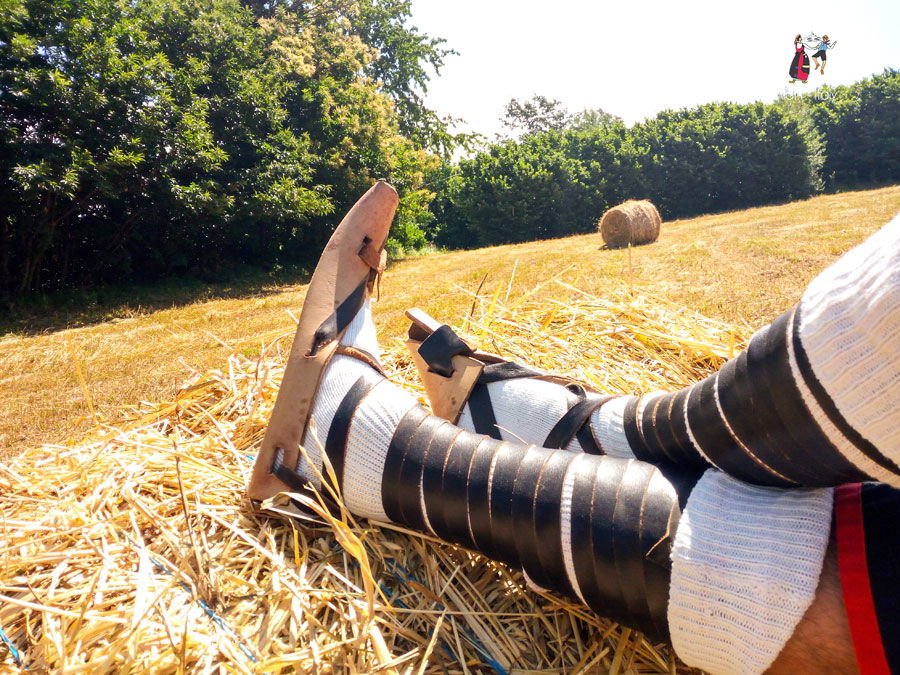
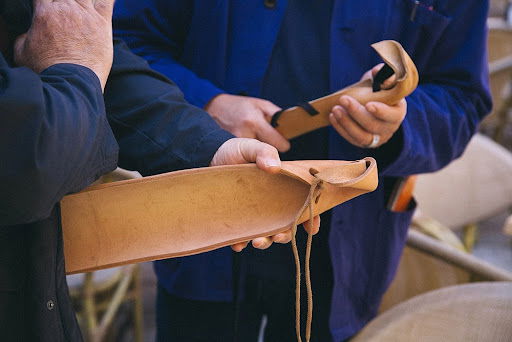
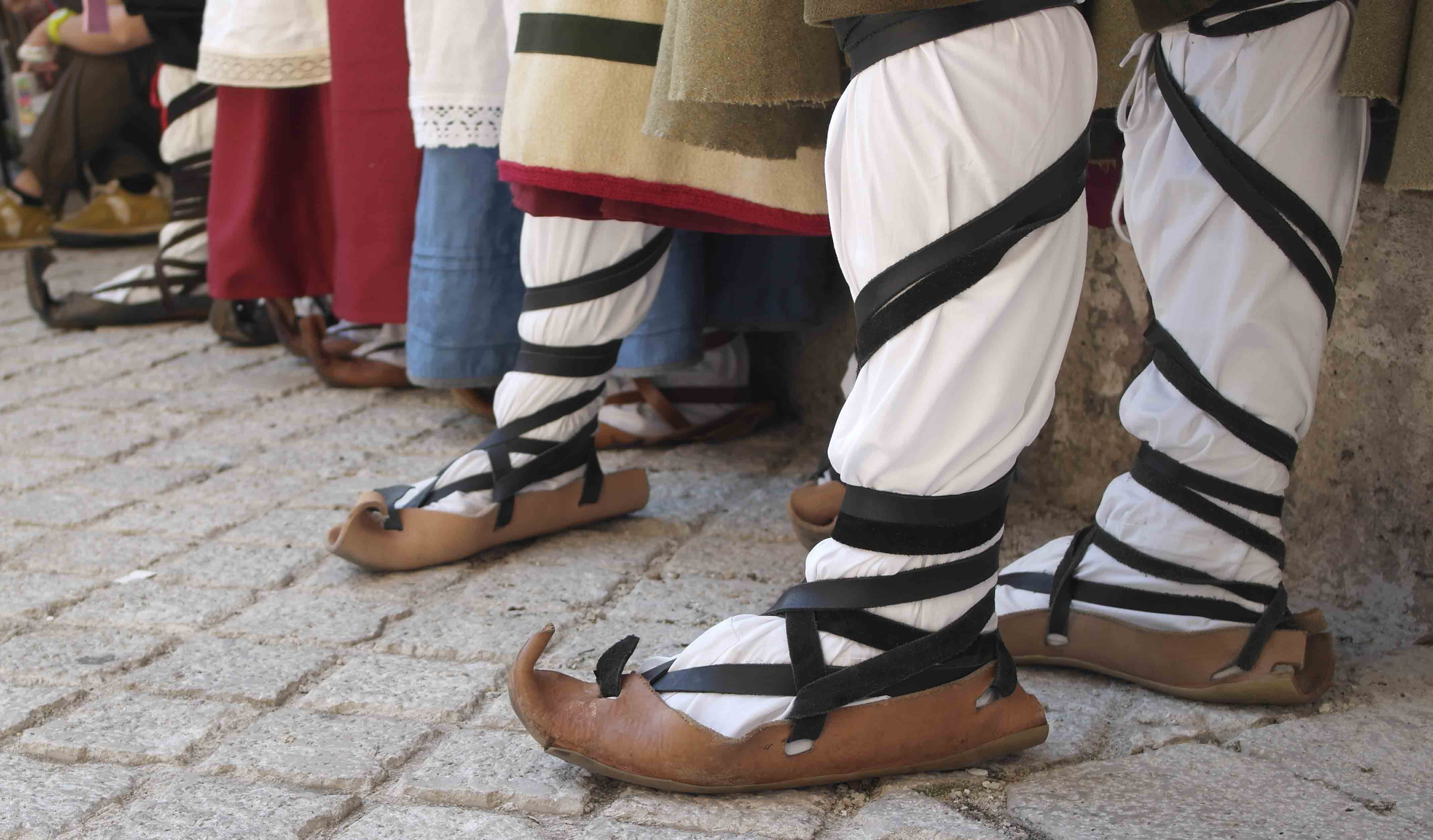
Traditional footwear worn by shepherds was perhaps the very first product of Ciociaria craftsmanship. The very first, and today, symbolic. Arpino is the town that still produces them by hand, motivated by the "Gonfalone" (the national banner) that requires them to be worn every August for the parade in Ciociaria costume. Ciocie were the typical footwear of Lower Lazio, also widespread in many regions of central and southern Italy, which, since the 18th century, gave their name to a part of its territory (Ciociaria) and its inhabitants. Their origin is disputed, and a learned tradition, based on a passage from the Aeneid, traces them back to the Ernici people, whose major centers were Ferentino, Anagni, Alatri, Veroli, and Frosinone. In recent centuries, they have been the most affordable, self-made footwear par excellence; Made from natural or tanned cow, sheep, pig, buffalo, and donkey hides, they were sturdy and suitable for walking on cultivated fields and rugged trails, as well as resistant to strenuous work, such as digging. In their construction, awls or knives were used to cut the leather—which often retained its characteristic pelage—and a gouge (a bladed chisel used to make nearly identical rectangular or oval holes for the laces). The boot featured a curved leather insole, almost boat-shaped, sometimes with a more or less curled and arched toe, tied with long, flexible leather laces that wrapped around the calf to the knee, with two strings at the ends for easy tying. In ancient times, strings, cords, or ribbons were used instead of laces. Under the insole, two leather reinforcements (taccuni) were inserted with nails or handcrafted staples, onto which the "taccuni" (nails) were attached. These very short nails had large, rounded heads to prevent wear and slip. After the Second World War, the leather was replaced with pieces of tires and inner tubes.
MUSIC
SAN SISTO
SAN PIETRO EREMITA
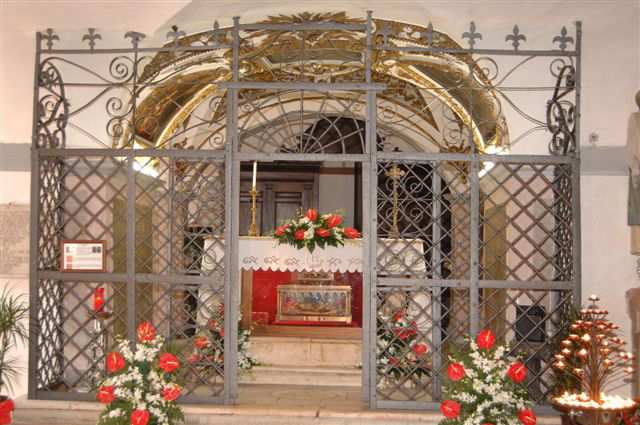
From August 28th to 31st of each year, the patronal feast of Saint Peter the Hermit is held. It is an event considered by the entire population to be the most important moment in life, not only religious but also social and civic, due to the intensity and emotional involvement with which it has been experienced for nearly 1,000 years. Saint Peter was born in Rocca di Botte near Carsoli in Abruzzo, where he lived until his youth. Then, to escape a marriage arranged by his parents, he left for Tivoli in 1048, staying for two years at the apostolic school of Cleto, a deacon of the Tiburtine church. His teacher, seeing that he had achieved adequate preparation, introduced him to the bishop of Tivoli, Gregory, who assigned him the task of preaching religion among the inhabitants of the various villages of the diocese, conferring upon him the tonsure and presenting him with an iron cross, which is still preserved among the relics of the Collegiate Church of Trevi. On August 9, 1052, he left Subiaco and reached Trevi the following day, ascending the Aniene Valley. He remained in Trevi for 20 days, during which he carried out his profound evangelization work, also performing several miracles, benefiting two children: Gualtiero, who regained his sight, and Liuto, who, paralyzed, regained his freedom of movement. On August 29, the Saint was struck by a severe fever and retreated to the darkness of a basement, where he died the following day, August 30. His bones are preserved in the crypt located in the Church of Santa Maria Assunta.
THE PALIO OF BONIFACIO VIII
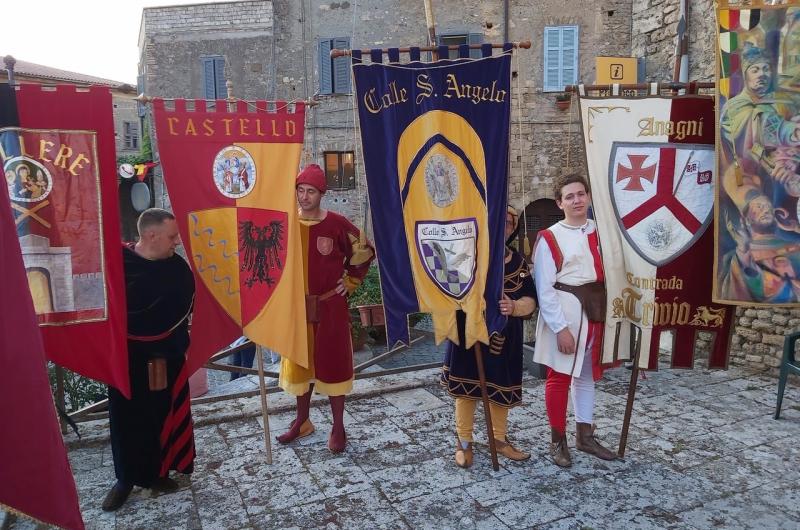
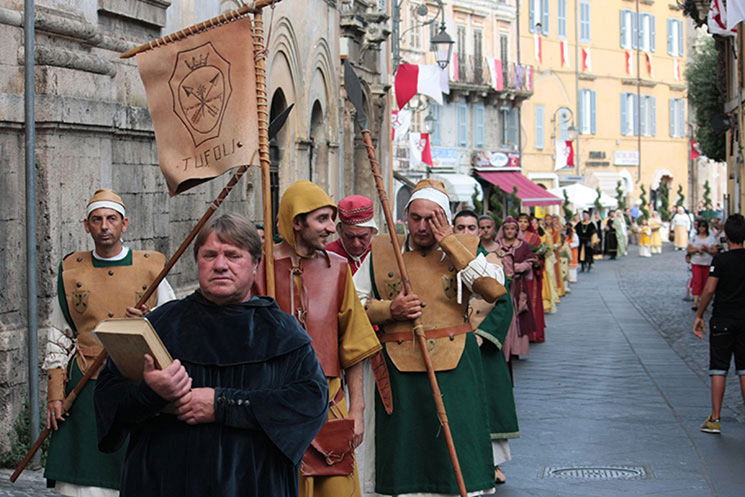
During the Palio di Boniface VIII, the districts of the city of Fiuggi, represented by their knights, compete in a thrilling jousting tournament. The knights and their steeds demonstrate courage, skill, dexterity, and speed to secure victory for their district and, with it, the honor of offering the miraculous water that breaks the stone to Pope Boniface VIII. As a sign of gratitude, the Pope will entrust the precious empty amphora to the district that wins the tournament. The festival features historical reenactments, jousts, and performances by local flag-throwers. Past Program Day 1 4:00 PM Gathering of participants - 4:30 PM Fonte Bonifacio VIII, amphorae filling ceremony and entertainment by the Artena flag-wavers - 5:00 PM Historical parade from Fiuggi Fonte to Piazza Trento e Trieste - 6:30 PM Arrival of the parade in the town square - 6:45 PM Blessing of the water and the Knights ceremony - 7:00 PM Show by the Artena flag-wavers - 7:45 PM Medieval dinner. Jugglers, storytellers, fire-eaters, warriors, and street artists from the Foedus Ars group will provide the backdrop for the dinner. Day 2 11:00 am: Walk with people in period costume through the historic center of Fiuggi - 3:00 pm: Departure of the historical parade - 3:15 pm: Welcoming ceremony for Pope Boniface VIII - 3:30 pm: Entrance of the guests from the Cellere district of Anagni, who will perform a piece of music in honor of Pope Boniface VIII - 3:45 pm: Parade in the Fiuggi Fonte procession - 4:20 pm: Flag-wavers' show and drawing of lottery tickets (tickets will be awarded to the knights of the districts. The order of arrival will assign the prizes) - 4:50 pm: Joust tournament between the five districts - 6:00 pm: Offering of water to the Pope by the lady representing the winning district of the joust - 6:15 pm: Award ceremony for the knights - 6:45 pm: Thanksgiving ceremony
FESTIVAL OF THE RETURN
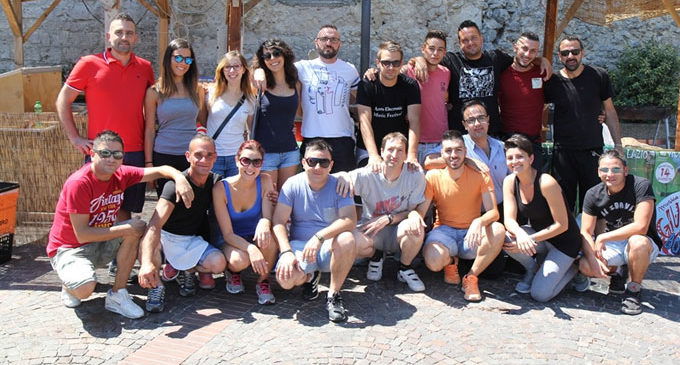
In the medieval village of Vico nel Lazio, on the slopes of the Ernici Mountains, the 16th edition of the Return Festival will take place on 4 August 2019 with the unmissable Gnocchi Festival with Sheep Sauce. It is a gastronomic event that will offer the gourmet tourist one of the traditional dishes of the Ciociaro village. A day dedicated to those who over the years have left the country to return to relive the games, the smells, the alleys that have marked the life of the citizens of Vico in Lazio. An unmissable event among the oldest, linked to local traditions, created by the ManiSlegate association. The party will be an excellent opportunity to discover the historical beauties of the country. The tourist will be able to relive those involving atmospheres of the past that he will bring with him on his return home.

THE DAYS OF THE SLAP
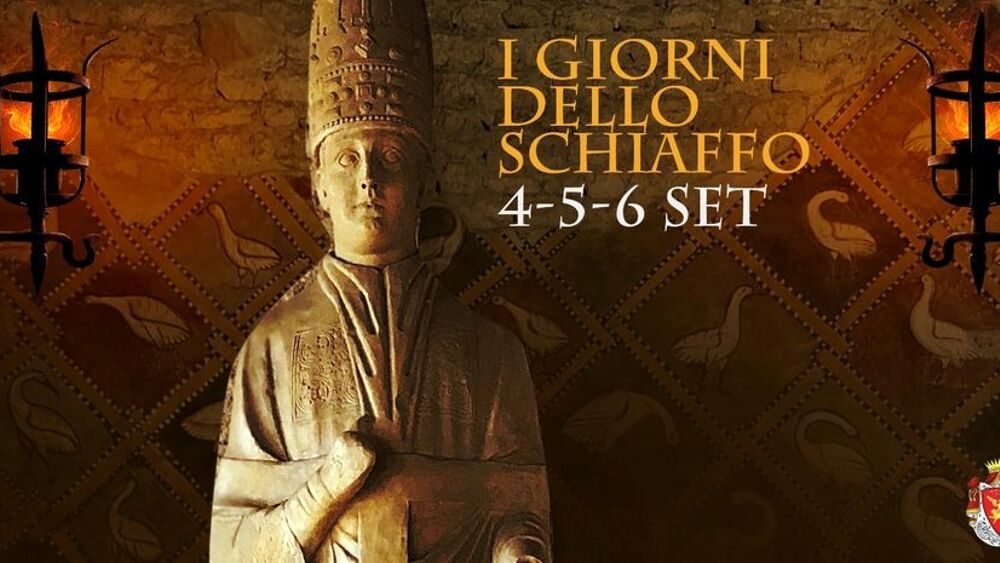
Hated outside the Papal States, Boniface VIII was disliked within the Holy See, either. Struck by his arrogant and self-centered attitude, some members of the Curia and the Roman aristocracy, led by Cardinals Pietro and Giacomo Colonna, turned against him. They claimed his election was illegitimate and for this reason, in 1297, they dismissed him. The pope's revenge was terrible: he excommunicated the two cardinals, confiscated their assets, and in 1299 had Palestrina, the Colonna stronghold, razed to the ground, "so that nothing would remain, not even the title or name of a city." The Colonnas, who took refuge in France, however, had their revenge: aided by King Philip IV the Fair, who never accepted submission to the pope, they managed to put the pontiff on trial in June 1303, with a view to his dismissal. In early September, events escalated: Giacomo Sciarra Colonna and the French Councilor of State, aided by the Anagni bourgeoisie and several cardinals, stormed the papal palace, captured the pope, and held him prisoner. They spared no insults, some even physical, which is why the episode went down in history as "The Slap of Anagni." Boniface was saved only by the intervention of his fellow citizens: broken in body and spirit, he returned to Rome on September 25th and died there just over two weeks later. Every year, during these same days, Anagni takes a leap back in time to the 14th century: its streets and magnificent squares are filled with costumed figures, flag-wavers, medieval music and dance, special guided tours are offered, and the historical events surrounding the famous "slap" are recalled with a traveling theatrical performance in the very places where, according to tradition, the episode occurred: the splendid halls of Palazzo Bonifacio VIII, which, together with the Palazzo Comunale Iacopo d'Iseo, are the driving forces behind these three days.